Formula One
02 Feb 2019

Credit: Alfa Romeo/Newspress
There’s something special about Alfa Romeo. Nobody really knows what that is, but there’s no denying that the legendary Italian marque has a unique place in the hearts of petrolheads.
For the last couple of decades the brand hasn’t done much of note, mainly churning out rebadged Fiat hatchbacks. Even when it did do interesting things before that, those positives were often coupled with frustrations of some kind. But now Alfa Romeo seems to be the real deal again.
After years in the doldrums, it set off on its road to recovery back in 2014 when parent company Fiat Chrysler announced a five year growth plan for the brand. The plan included a return to the American market for the first time since 1995 and an increase of its sales targets each year. In 2017 Alfa Romeo increased its production by 62 percent, building 150,722 cars and it is planning to shift 400,000 units annually by 2022.
A raft of new models have arrived to help achieve that goal. After teasing us with the the limited-run (and drop-dead gorgeous) 8C Competizione of the late 2000s, Alfa Romeo added the 4C sports car in 2013, the Giulia sports saloon, and the Stelvio SUV in 2016. Also on the way is a new sports coupe and a supercar, as well as another SUV to keep the sales figures up and the accountants happy. It’s night and day compared to a few years ago when it only offered the parts bin Mito and Giulietta hatchbacks, and while it still has a long way to go to pose a serious threat to the likes of BMW, Mercedes, and Porsche, people are starting to take Alfa Romeo seriously once again.
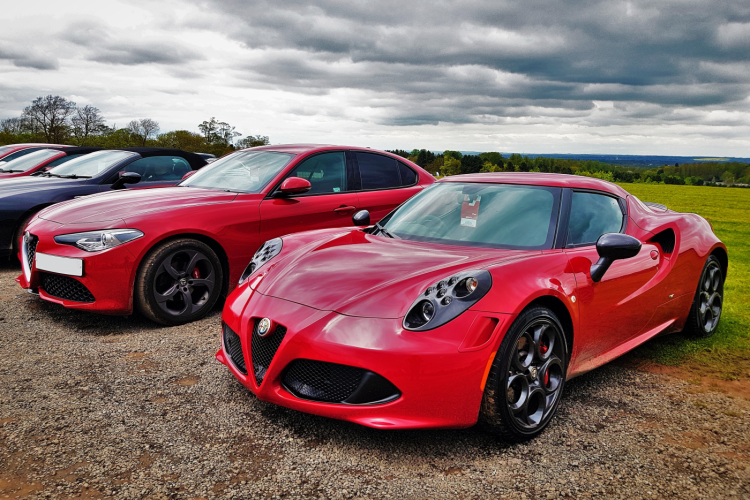
The Giulia (L) and the 4C (R) were signals of intent from Alfa Romeo – Credit: Dominik Wilde
But what about on the track? We’re constantly told about Alfa Romeo’s racing heritage – and it did win the first two Formula 1 drivers’ championships in 1950 and 1951 – but it hasn’t won a race in F1 since ’51 and hasn’t had a proper factory presence since 1985. What’s more, save for a brief flirtation with the World Touring Car Championship in the mid-2000s, it hasn’t had any kind of major motorsports programme since the 1990s.
Whispers of a return to IndyCar as an engine supplier for the first time since 1991 have been around for a while, and before former FCA CEO Sergio Marchionne’s untimely passing last year, he all but confirmed he was considering taking the brand back to North America’s premier open-wheel series.
“Why not Alfa Romeo and IndyCar? We think about it,” Marchionne told German website Motorsport Total at the 2018 Detroit auto show. Alas, no such move has happened and there are no indications is could happen any time soon either.
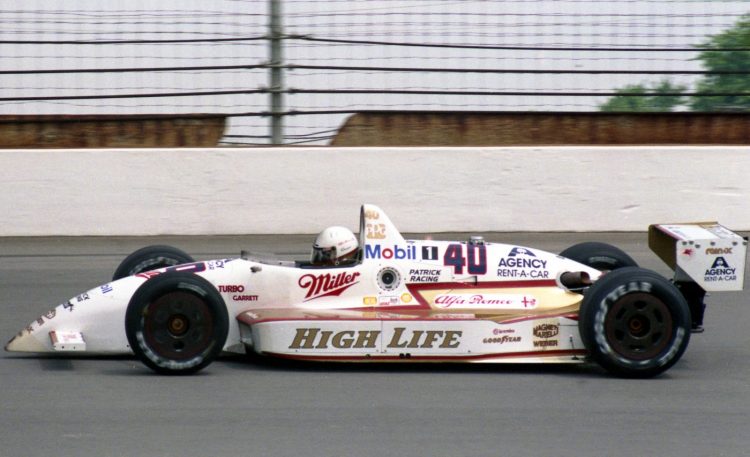
Al Unser driving an Alfa Romeo-powered March at the 1990 Indy 500 – Credit: IndyCar Media
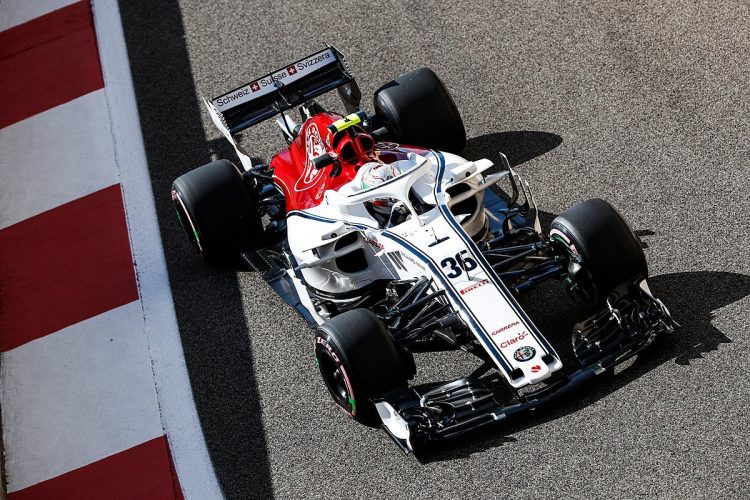
In 2018 Alfa Romeo made a tenuous return to F1 as the title sponsor of Sauber after three years being a minor sponsor of Ferrari. This week though it was announced that the Sauber nameplate would be shelved and the Swiss team would be renamed Alfa Romeo Racing.
“Alfa Romeo Racing is a new name with a long history in Formula 1,” said Michael Manley, FCA Group CEO. “We’re proud to collaborate with Sauber in bringing Alfa Romeo’s tradition of technical excellence and Italian panache to the pinnacle of motorsport.”
The name suggests a full factory operation, but it will remain under the same management and ownership, despite its new name, and it is currently unknown both what flag the team will race under and what the team’s chassis will be called. The partnership that began last year was always intended to grow beyond the placement of a few stickers, this is just the natural next step.
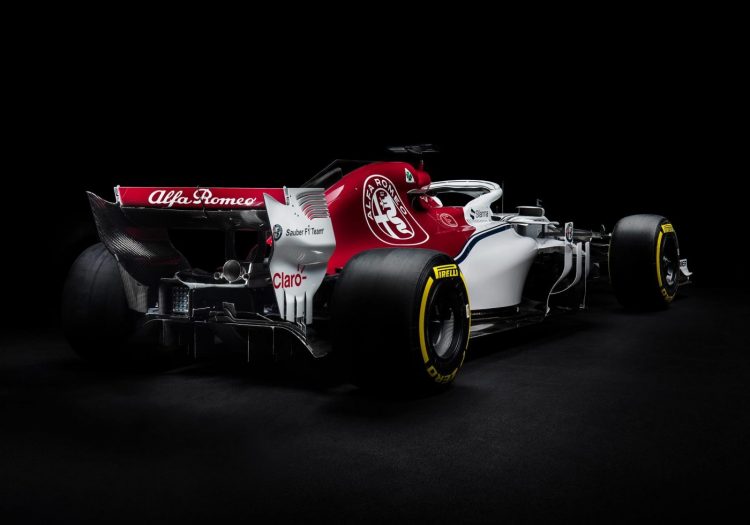
Alfa Romeo branding featured prominently on the 2018 Sauber F1 car – Credit: Alfa Romeo/Newspress
“After initiating the collaboration with our title sponsor Alfa Romeo in 2018, our team made fantastic progress on the technical, commercial and sporting side,” said Frédéric Vasseur, Alfa Romeo Racing team principal. “This has given a boost of motivation to each team member, be that track-side or at the headquarter in Switzerland, as the hard work invested has become reflected in our results.
“We aim to continue developing every sector of our team while allowing our passion for racing, technology and design to drive us forward.”
Like Alfa Romeo’s road car business, its F1 team will retain a close relationship with former FCA property Ferrari.
The F1 team’s car will be powered by a Ferrari engine, much like the hottest Giulia and Stelvio; while its driver lineup will comprise Ferrari tester Antonio Giovinazzi and 2007 world champion Kimi Raikkonen. Ex-Ferrari driver Raikkonen joins the team in place of Ferrari Driver Academy member Charles Leclerc who has graduated to the Prancing Horse’s own team.
Ferrari man Giovinazzi also served as Sauber’s reserve in 2018 and tested with the team multiple times during the year – Credit: Twitter (@SauberF1Team)