Road Cars
16 Mar 2019

Credit: Dominik Wilde/Jack Elleker
Despite covering the Geneva motor show for Motor1 over the last couple of years, I’ve never actually been to the event myself.
This year I put that right – it wasn’t a work trip, more a fun 10-hour holiday to Switzerland to check out the latest and greatest the automotive world has to offer. It didn’t disappoint.
Geneva is seen as one of, if not the most important motor show on the planet, where a whole host of manufacturers come to show off their latest offerings and concepts giving a glimpse into the future. There were some notable absences this year – Ford, Hyundai, Volvo, and Jaguar Land Rover to name a few, but there was still plenty to take in.
Here’s my pick of 10 of the best from the 2019 Geneva motor show:

Credit: Dominik Wilde
Let’s cut to the chase – the Bugatti La Voiture Noire is the most expensive new car on the planet, priced at around £9.5 million before tax, or £14.5 million all in.
It’s inspired by the iconic Type 57 Atlantic of the 1930s, of which just four were made. Only three of those remain today after the second of the four built, chassis no. 57453, went missing during the war. La Voiture Noire – or ‘The Black Car’ – is effectively a replacement for the missing Atlantic, which shared the same nickname.
Based on an elongated version of the same platform used for the Chiron and the Divo, La Voiture Noire is powered by Bugatti’s famous quad-turbo W16 8.0-litre engine, putting out 1,500 bhp. Because of that monstrous powerplant, the car will be good for around 250 mph despite being the size of a mid-sized planet. It’s even road legal, but good luck parking it.
Want one? (Or ‘it’ I should say, because Bugatti is only building the one) Well you’re too late. The car has already been sold, with unconfirmed reports suggesting that the buyer is former Volkswagen chief Ferdinand Piech.
Credit: Dominik Wilde
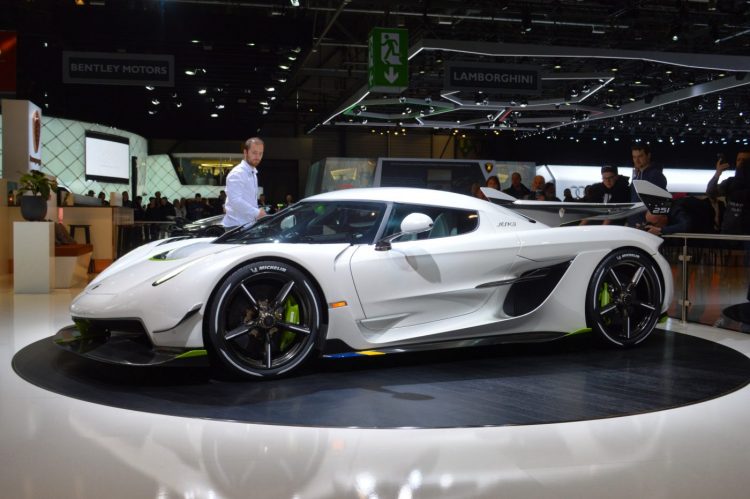
Behold! It’s here – the world’s first 300 mph car… apparently.
That’s the number Swedish hypercar maker Koenigsegg is hoping to crack with its latest bonkers creation, which has been named after the father of the company’s founder. Power comes from the latest incarnation of Koenigsegg’s own 5.0-litre twin-turbo V8, which is now putting out 1,280 bhp – or 1600 bhp if you fill it up with environmentally-friendly E85 fuel.
Surprisingly the engine isn’t the most interesting part of this car though. The nine-speed gearbox, which is dubbed the Light Speed Transmission (LST), has a staggering nine clutches. Having one per cog allows the car to change gear much quicker and accelerate at, erm, ‘light speed’.
Koenigsegg is keeping its cards close to its chest when it comes to other performance figures, besides the power and top speed numbers. What we also don’t know is whether the 300 mph milestone will be with this launch model or with an even faster variant of the Jesko which may come later.
The car will be homolgated worldwide unlike previous Koenigseggs, but only 125 will be built, each at a price of over £2.2 million, so it’ll still be ultra-rare.
Credit: Dominik Wilde
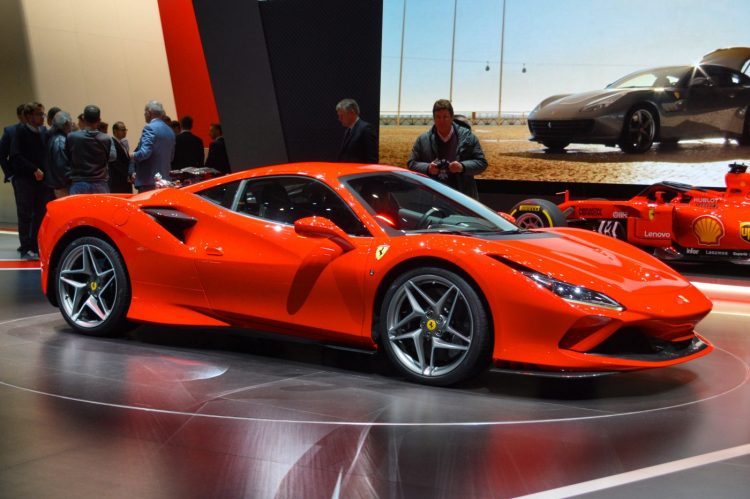
The latest in a long, long line of mid-engined V8 Ferraris, the F8 Tributo is the most powerful one yet.
It takes the place of the 488 GTB just four years after that car was unveiled, and the influence of its predecessor can clearly be seen from the outside. Under the skin though it’s more than just a facelift – the 3.9-litre twin-turbo engine puts out 49 more horsepower compared to the 488. That’s not as big a leap as the 99 bhp jump the 488 had over the 458, but it’s still substantial.
The F8 Tributo is also 0.1 seconds quicker to 62 mph and 6 mph faster overall at 211 mph, thanks to the increased power and the loss of around 40 kg from the car’s base weight.
Compared to the first two cars on this list, it will also be somewhat affordable. Prices are set to start at around £200,000 but as with almost everything from the Prancing Horse, there will no doubt already be a pretty long waiting list.

Credit: Dominik Wilde
Lamborghini has taken a tin-opener to its latest OTT flagship, and the end result is quite something.
Like its hardtop sibling, the Aventador SVJ Roadster looks similar to the limited-run Veneno that the Italian firm put out a few years back, although more than a handful will be rolling out of the factory this time around – 800 in fact.
Power comes from Lamborghini’s signature V12, putting out a more-than-adequate 760 bhp. That figure helps make up for the added 50kg of weight needed to compensate for the loss of the roof – the 0-62 mph time of 2.9 seconds is just a tenth slower than the coupe, and the top speed remains at 217 mph.
With the SVJ Roadster, Batman can enjoy the wind in his cape, but for £323,323 it’s a shame you have to actually built the roof yourself when the rain comes. First world problems…
Credit: Dominik Wilde
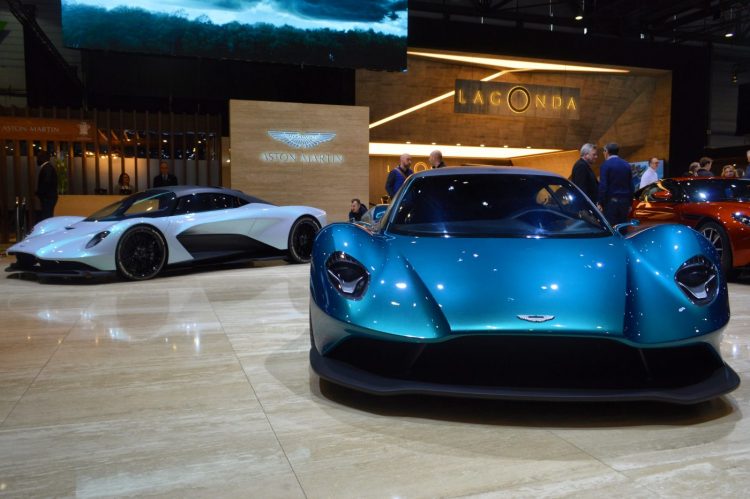
Okay, so this is sort of cheating, but Aston Martin had two new cars worth talking about on its stand in Geneva.
The AM-RB 003 (left) offers a glimpse at an all-new car set to take the fight to things like the Ferrari La Ferrari, McLaren P1, and Porsche 918 (because apparently nobody told Aston Martin that those cars aren’t in production anymore), while the Vanquish Vision Concept previews a more ‘mainstream’ model from the brand.
Both cars follow the Formula 1-inspired Valkyrie (which made a hasty departure from the show before I arrived) as part of Aston Martin’s mid-engined revolution. Of course, the brand will still make its familiar front-engined grand tourers, and an SUV, but this new direction shows just how serious Aston Martin is about taking the fight to the likes of Ferrari and McLaren after decades of difficulties.
Credit: Dominik Wilde
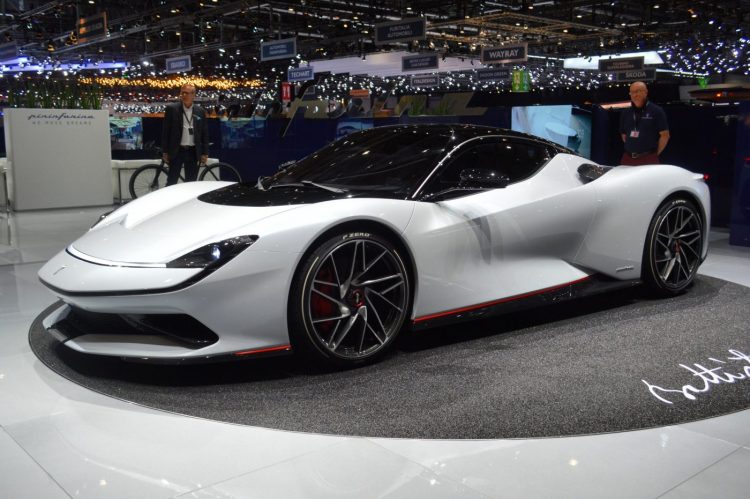
Pininfarina has been in the supercar game for decades, although as a design house penning some of the most iconic fast cars we’ve seen… and the Hyundai Matrix.
Now, as the automotive world starts to migrate to electric power, Pininfarina has decided to go it alone with the drop-dead gorgeous Battista supercar.
The Battista is actually the most powerful road car to ever come out of Italy – I’m sure their friends at Ferrari will love that. The four-motor setup produces 1,874 bhp and 1,694 lb-ft of torque, with the 0-62 dash handled in under two seconds (that’s quicker than a modern F1 car) and the top speed being 218 mph.
Of course, with it being an electric car, range has to be discussed. It’s not bad, either – on a full charge the 120 kWh battery has around 280 miles of driving range, although if you open the taps on a track that figure will drop rapidly.
It’s a fantastic creation from one of the car world’s most iconic names, but of course there will still be dinosaurs out there who will have a moan about it not being petrol-powered.
Credit: Dominik Wilde
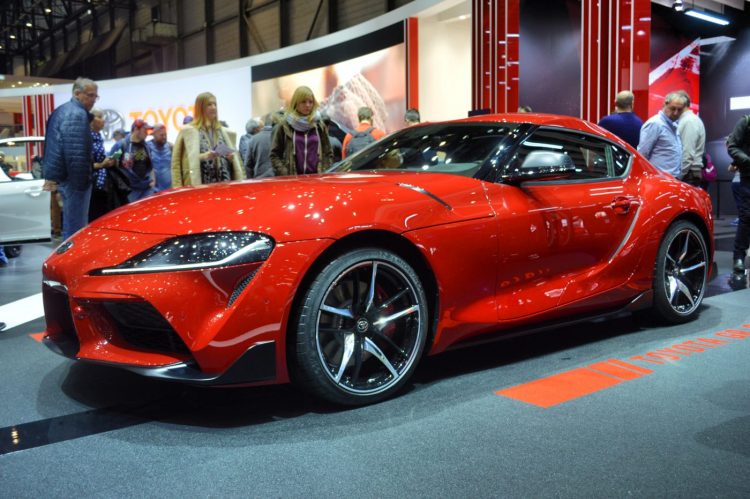
No. This is not the new BMW Z4. Of course, the two share parts – a lot of parts – but platform and part sharing is nothing new, nor is it a bad thing. Still, many JDM enthusiast are up in arms about the new Supra.
If you’re appreciative of a decent car though, regardless of what a few stickers in the engine bay say, then read on.
The new Supra has been in the works for a while, and Toyota has been teasing it for so long that it almost feels like an old car now that the covers have finally come off the production-ready model.
Outside it’s clearly different to its BMW cousin (it even has a roof!), while on the inside the similarities are a little more noticeable. Power comes from the Germans, too, with a choice of turbocharged four- or six-pots, while the eight-speed automatic transmission comes from ZF Friedrichshafen and has been used in countless other cars. That’s sort of the biggest issue with the car actually, not that it’s not really a Toyota, but that no manual transmission is being offered.
It’s pricey too – at around £50,000, most of the irritating internet commenters slating it probably can’t afford one anyway.
Credit: Dominik Wilde
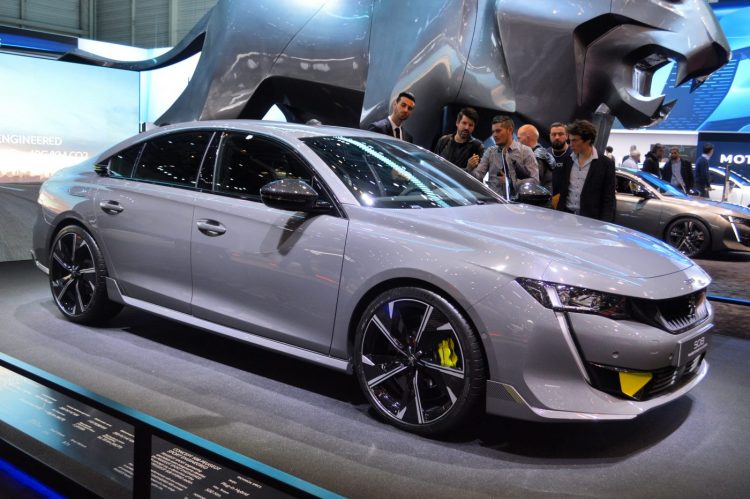
Another cheat entry on the list, but with good reason. Peugeot is out to prove it doesn’t just make rubbish for people who can’t drive properly.
First up is the snappily-titled 508 Peugeot Sport Engineered concept, which reminds the world that the boys and girls at Peugeot know how to make a properly fast car. The 197 bhp 1.6-litre four-cylinder turbocharged engine in it is mated to a pair of electric motors which means its good for a not-very-Peugeot-like 155 mph.
It’s only a concept at the moment, but word its the French firm is planning to put it into production. Yes please!
Credit: Dominik Wilde
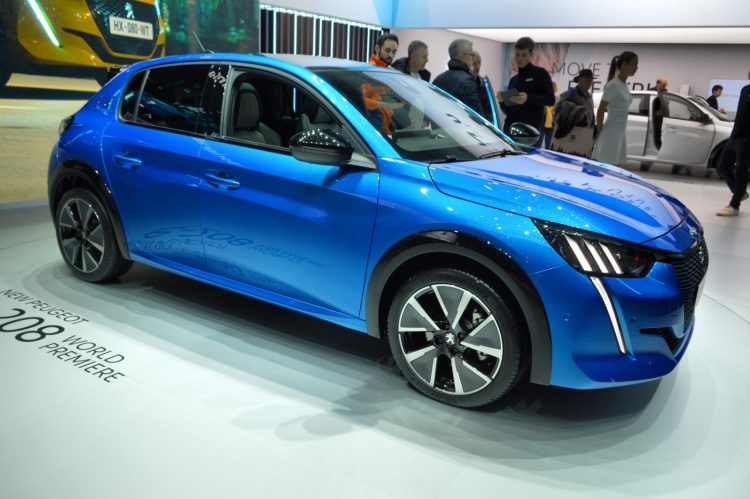
The other standout car on Peugeot’s stand at the Geneva motor show was the new 208. The hatchback will be available as a conventional petrol model or as an all-electric car (above). It’s a pretty little thing, and that’s most welcome because for the last 20 years or so most Peugeots haven’t looked that great.
On the inside it looks more like something from a Marvel film thanks to Peugeot’s i-Cockpit, which makes use of touch screens, a futuristic 3D digital instrument cluster, aircraft-like switches, and few actual buttons. If I had one gripe it’d have to be the high up driving position, which somewhat takes away from the sporty feel of the rest of the car.
Credit: Dominik Wilde
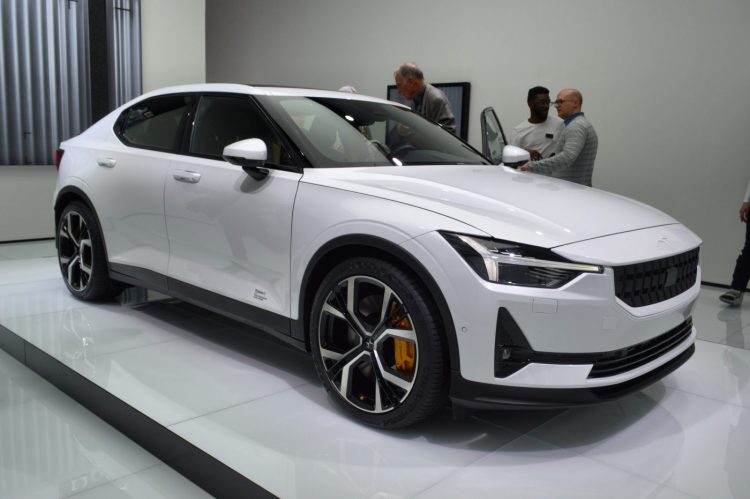
In a bid to take on Tesla (although no doubt with much better build quality), Volvo’s Chinese owners spun off the Swedish firm’s former performance division to create a standalone electric car brand a couple of years ago.
Polestar has already showcased the Polestar 1, a performance coupé based on Volvo’s venerable Scalable Product Architecture platform. In Geneva it was the Polestar 2’s turn to take centre stage.
Once again it’s based on Volvo’s SPA setup, but this time the car is a bigger, saloon-like vehicle that has the Tesla Model 3 in its crosshairs.
Range is said to be 310 miles, while the power figure is an impressive 402 bhp. Price-wise, it will also compete with the American brand’s first ‘mainstream’ model, although if you’re one of the first to get your name down for a Polestar 2, you’ll have to fork out more than £50,000 for the launch model, rather than around £34,000 you’ll be able to pay if you wait.
Credit: Dominik Wilde
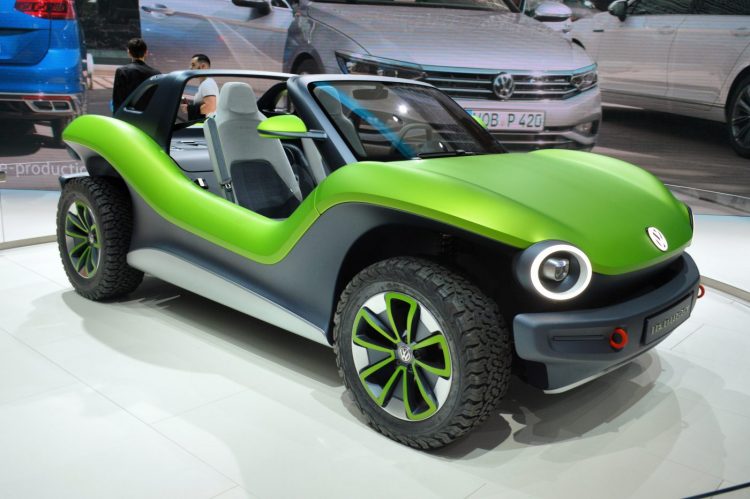
Who said the Germans don’t have a sense of humour? Away from its plethora of sensible family cars and well-thought-out performance models, Volkswagen showed off the funky all-electric I.D. Buggy Concept in Geneva.
The car, which is a nod to the iconic Volkswagen Beetle-based dune buggies of old, is a showcase of just what Volkswagen is capable off as it begins to introduce a huge range of electric cars all sharing the same I.D. basis. That means power from a 62 kWh lithium-ion battery pack, sending 201 bhp to a pair of motors on the axles – that’s actually the highest power output of all of the I.D. concepts we’ve seen yet.
For us weather-beaten Brits, it’s ideal… well, besides the lack off doors or a roof. The exposed interior is completely waterproof, as is the satin paint finish. Unfortunately, we don’t know if the Buggy will make it to production – if it does, I definitely want one.